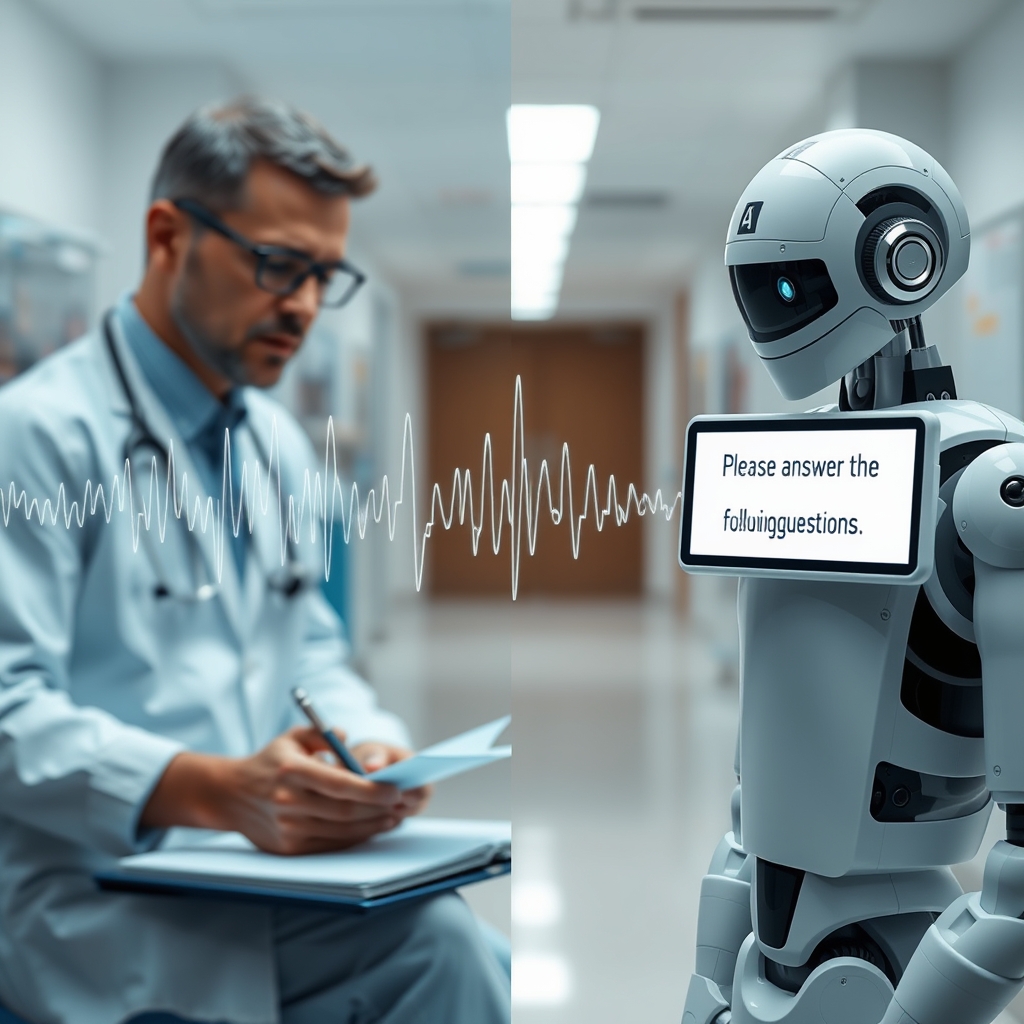
A recent study from the University of Würzburg has uncovered a significant and potentially dangerous flaw in AI-powered symptom checkers, revealing that users tend to provide less detailed information when interacting with these digital tools compared to human healthcare professionals. This phenomenon, termed “uniqueness neglect,” along with concerns about privacy and trust in AI, can lead to reduced accuracy in digital healthcare assessments.
The Impact of Reduced Detail
The research, published in Nature Health, involved participants reporting symptoms for common conditions like unusual headaches and flu-like ailments. The findings indicated that reports submitted to AI chatbots were considerably shorter, averaging 228.7 characters, than those intended for human doctors, which averaged 255.6 characters. Crucially, the reports generated for AI systems proved less useful in determining the medical urgency of a patient’s condition when compared to reports prepared for human physicians.
Professor Wilfried Kunde of the University of Würzburg, along with research associate Moritz Reis, led the study, emphasizing that enhancing AI technology alone is insufficient to overcome this communication gap.
Recommendations for Improvement
To address this critical issue and enhance the effectiveness of AI healthcare tools, the researchers propose several key recommendations for developers:
- Active Questioning: AI systems should be designed to actively prompt users with follow-up questions, especially when information appears to be missing or incomplete.
- Clear Examples: Developers should provide users with clear examples of detailed, high-quality symptom descriptions to guide their input.
- Improved User Interface Design: A better user interface is essential to foster stronger communication between patients and digital health systems.
The implications of these findings are substantial for the future development of AI in healthcare. By implementing these design improvements, it is believed that AI symptom checkers could become more reliable, potentially easing pressure on strained healthcare systems by reducing misdiagnoses.
**
Disclaimer:** This article is based on a study published in *Nature Health* and does not constitute medical advice. Always consult with a qualified healthcare professional for any health concerns.